
SA’s disposal of medical waste scrutinised amid global COVID-driven ‘time bomb’
South Africa’s capacity to safely dispose of medical waste is being scrutinised, with the World Health Organization (WHO) flagging the problem as a “ticking time bomb” on a global scale.
Earlier this month, WHO released a worrying report warning that thousands of tonnes of medical waste arising from the COVID-19 pandemic had placed a major strain on waste management systems around the world.
According to the global health body, this threatened both human and environmental health while exposing the dire need to improve waste management practices.
In South Africa, illegal dumping has been on the rise and medical waste has added to the crisis.
‘BIG BUSINESS’
“Waste is huge business. We’re talking about R10 million to R20 million disposed of each month,” said Bokka du Toit from the Kya Sand and Burning Wasteland Forum.
This group represented the community in the north of Johannesburg – from informal settlements to the farming community.
Items like “masks, syringes and medical equipment” were being dumped there, instead of being taken to incinerators where medical waste was supposed to be treated and burnt with the right air pollution control equipment.
“We see the unmarked delivery vehicles come in, it’s a highly organised, highly protected and highly secured environment at the centre of this huge burning wasteland. You have to travel between gravel roads that are guarded by these guys to protect their source of income,” Du Toit said.
ETHICS AND REGULATIONS
National government’s Director for Environmental Health, Murdock Ramathuba, admitted to Eyewitness News that the state did not have its own licensed incinerators to dispose of medical waste.
This meant waste management was left in the hands of the private sector. This raised serious doubts around ethics and regulations regarding the destruction of South Africa’s mounting medical waste when it was collected from hospitals and clinics.
“Currently it’s only the private sector receiving and treating our waste before final disposal. It’s costly to treat healthcare waste. The reason why the [government-owned] incinerators were discontinued was because they were not complying.
WHAT ARE THE HEALTH IMPACTS?
Johannesburg MMC for Environmental Affairs Michael Sun said that local government was trying to get to the bottom of illegal dumping.
“It’s a whole supply chain – illegal operators find any dump site and they have now found Kya Sand where they charge illegal operators,” Sun said.
The Health Department said that it was trying to get government-run incinerators back into the mix to bolster efforts to comply with air pollution and other legal requirements.
Unfortunately, no dates had been set, which meant that South Africa was at the mercy of private firms.
In responding to COVID contamination concerns, the department explained that depending on the texture of the surface, the COVID virus only lasted a few hours. When exposed to sunlight or heat, though, it was no longer infectious.
The department said there was also no need to classify masks and sanitiser containers as hazardous waste.

NO OTHER CHOICE
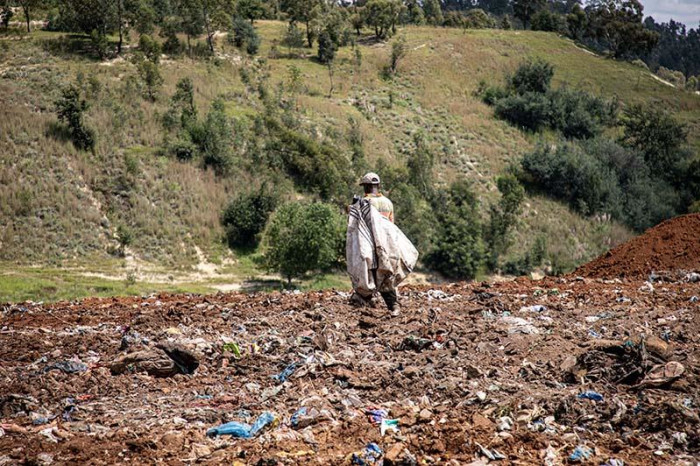
According to the Disaster Management Act published in 2020, waster pickers were supposed to wear gloves and masks at all times.
But waste pickers said while the risk of contamination was high, they had no other choice.
“A lot of people are throwing the masks in the dustbin. We get it in the landfill so maybe government must tell people not to throw their masks in the dustbin because there are people working here”.
It was estimated that the average two-adult household had already thrown out around 1,500 disposable masks during the pandemic.
Pikitup’s acting COO Makhosazana Baker noticed a huge increase in disposable masks arriving at waste sites, which was a major problem because they could not be recycled.
“How do we know of those households that are having positive cases and how do we deal with their waste stream? We are encouraging households to place masks in a plastic bag and seal it before they dump it.” Baker said.
SOURCE: EWN News
WATCH: Mask pollution: A threat to the environment